Monday, October 15, 2012

31 for 21 Day #15

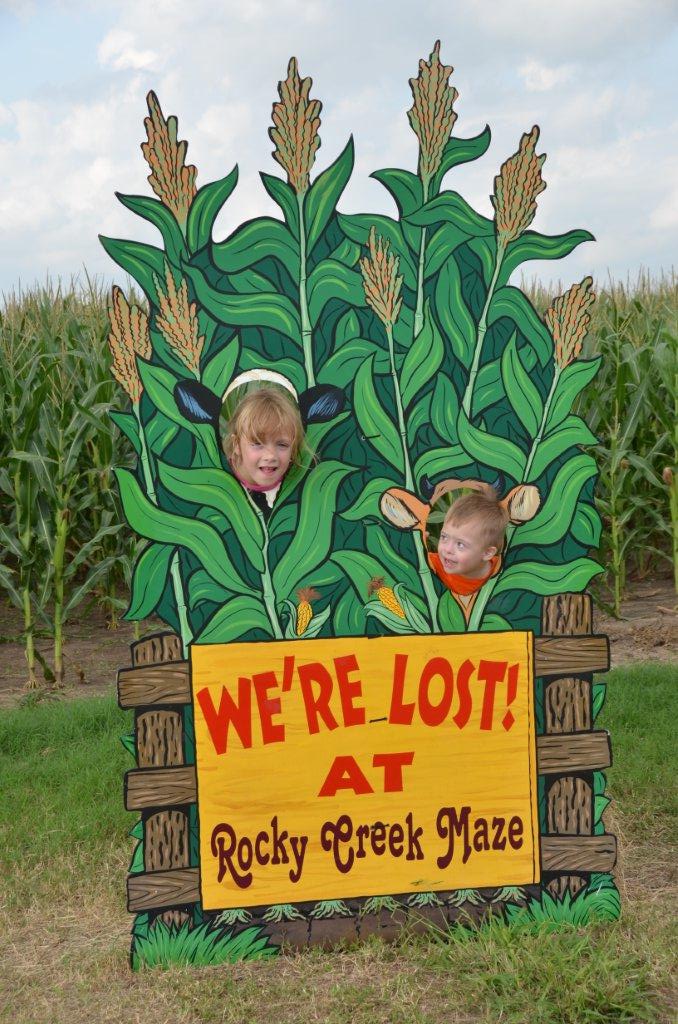
We had an A"maze"ing time at our 2nd Annual A"maze"ing Kids Fall Festival. 
A special thanks to everyone who came to support the Down Syndrome Foundation of South Texas. 


Sunday, October 14, 2012

31 for 21 Day #14

The Three Types of Down Syndrome
from Home Remedies for you .com:

Human chromosomes have a unique genetic code, which instruct and control the division, function as well as the growth of cells. Under normal circumstances, your cells contain 23 pairs of chromosomes, where one chromosome comes from your dad and the other from your mom. However, at times the cells could have three copies of a particular chromosome, instead of two. People who have three copies of the Chromosome 21 are born with Down syndrome. Other genetic problems occur when the duplicated chromosomes are other than Chromosome 21. Therefore Down syndrome is also commonly known as Trisomy 21.
Not a lot of people are aware of the fact that Down syndrome can be classified into three different kinds. Given below are facts about the three types of Down syndrome –

Standard Trisomy 21 or Nondisjunction Down syndrome
Around 90% to 95% of all the people who have Down syndrome are suffering from Standard Trisomy 21. Individuals who have 3 copies of Chromosome 21 in all the cells are born with this form of Down syndrome. Trisomy 21 occurs when there is an abnormal division of cells during the development of the egg cell or even the sperm cell. Around 88% of all Down syndrome instances come from the nondisjunction in the maternal gamete; while the paternal side constitutes of 8% of the total cases.

Mosaicism
Standard Trisomy 21 occurs when there is a nondisjunction in the gametes before conception, which affects all the cells present in the child’s body. However, at times only certain cells are affected by the abnormal division, while others are just fine. This is known as Mosaic Down syndrome, or Mosaicism. There are two ways in which this form of Down syndrome can occur. The first is a nondisjunction process that occurs during the earlier stages when the cell divides in the embryo that is normal, which results in few of cells being affected by Trisomy 21. The other way occurs when an embryo with Down syndrome goes through nondisjunction, but certain cells within the embryo return to the standard chromosome arrangement. This form of the disorder is quite rare and constitutes for about 1% or 2% of observed Down syndrome instances.

Translocation
Sometimes, Down syndrome is caused when part of Chromosome 21 becomes attached or trans-located to a different chromosome, before or during conception. People who have Translocation Down syndrome have the normal two copies of chromosome 21. However, they also have extra material from chromosome 21 attached onto the trans-located chromosome. Translocation Down syndrome is the only type that can be passed on from a parent to the child. This form of the disorder is also quite uncommon and constitutes for about 2% or 3% of observed Down syndrome instances.

Friday, October 12, 2012

31 for 21 Day #12

2012 Down Syndrome Foundation of South Texas October Awareness Campaign
 
This book will be delivered to elementary schools in Lavaca, Dewitt, Fayette, Colorado, Austin and Wharton counties with a request for elementary school teachers to read it to their classes in October to promote Down syndrome awareness and it will be donated to the school libraries for future readers to enjoy.

Thursday, October 11, 2012

31 for 21 Day #11

Myths & Truths
Source:  NDSS
 
MYTH: Down syndrome is a rare disorder.
TRUTH: Down syndrome is the most commonly occurring genetic condition. One in every 691 babies in the United States is born with Down syndrome, or approximately 6,000 births per year. Today, there are more than 400,000 people with Down syndrome living in the United States.

MYTH: People with Down syndrome have a short life span.
TRUTH: Life expectancy for individuals with Down syndrome has increased dramatically in recent years, with the average life expectancy approaching that of peers without Down syndrome.

MYTH: Down syndrome is hereditary and runs in families.
TRUTH: Down syndrome is hereditary in approximately 1% of all instances. In the other 99% of cases Down syndrome is completely random and the only known factor that increases the risk is the age of the mother (over 35). Translocation is the only type of Down syndrome known to have hereditary link. Translocation accounts for 3 to 4% of all cases of Down syndrome. Of those, one third (or 1% of all cases of Down syndrome) are hereditary. 
 
MYTH: Most children with Down syndrome are born to older parents.
TRUTH: Most children with Down syndrome are born to women younger than 35 years old simply because younger women have more children. However, the incidence of births of children with Down syndrome increases with the age of the mother.

MYTH: People with Down syndrome have severe cognitive delays.
TRUTH: Most people with Down syndrome have cognitive delays that are mild to moderate. Children with Down syndrome fully participate in public and private educational programs. Educators and researchers are still discovering the full educational potential of people with Down syndrome.

MYTH: Most people with Down syndrome are institutionalized.
TRUTH: Today people with Down syndrome live at home with their families and are active participants in the educational, vocational, social, and recreational activities of the community. They are integrated into the regular education system and take part in sports, camping, music, art programs and all the other activities of their communities. People with Down syndrome are valued members of their families and their communities, contributing to society in a variety of ways.

MYTH: Parents will not find community support in bringing up their child with Down syndrome.
TRUTH: In almost every community of the United States there are parent support groups and other community organizations directly involved in providing services to families of individuals with Down syndrome.

MYTH: Children with Down syndrome must be placed in segregated special education programs.
TRUTH: Children with Down syndrome have been included in regular academic classrooms in schools across the country. In some instances they are integrated into specific courses, while in other situations students are fully included in the regular classroom for all subjects. The current trend in education is for full inclusion in the social and educational life of the community. Increasingly, individuals with Down syndrome graduate from high school with regular diplomas, participate in post-secondary academic and college experiences and, in some cases, receive college degrees.

MYTH: Adults with Down syndrome are unemployable.
TRUTH: Businesses are seeking adults with Down syndrome for a variety of positions. They are being employed in small- and medium-sized offices: by banks, corporations, nursing homes, hotels and restaurants. They work in the music and entertainment industry, in clerical positions, childcare, the sports field and in the computer industry to name a few.

MYTH: People with Down syndrome are always happy.
TRUTH: People with Down syndrome have feelings just like everyone else in the population. They experience the full range of emotions. They respond to positive expressions of friendship and they are hurt and upset by inconsiderate behavior.

MYTH: Adults with Down syndrome are unable to form close interpersonal relationships leading to marriage.
TRUTH: People with Down syndrome have meaningful friendships, date, socialize, form ongoing relationships and marry.

MYTH: Down syndrome can never be cured.
TRUTH: Research on Down syndrome is making great strides in identifying the genes on chromosome 21 that cause the characteristics of Down syndrome. Scientists now feel strongly that it will be possible to improve, correct or prevent many of the problems associated with Down syndrome in the future.


Wednesday, October 10, 2012

31 for 21 Day #10

Preferred Language Guide
Source:  NDSS
Use this language when referring to Down syndrome and people who have Down syndrome:
  • People with Down syndrome should always be referred to as people first. Instead of "a Down syndrome child," it should be "a child with Down syndrome." Also avoid "Down's child" and describing the condition as "Down's," as in, "He has Down's."
  • Down syndrome is a condition or a syndrome, not a disease.
  • People "have" Down syndrome, they do not "suffer from" it and are not "afflicted by" it.
  • Down vs. Down's - NDSS uses the preferred spelling, Down syndrome, rather than Down's syndrome. While Down syndrome is listed in many dictionaries with both popular spellings (with or without an apostrophe s), the preferred usage in the United States is Down syndrome. This is because an "apostrophe s" connotes ownership or possession. Down syndrome is named for the English physician John Langdon Down, who characterized the condition, but did not have it. The AP Stylebook recommends using "Down syndrome," as well.
  • While it is still clinically acceptable to say "mental retardation," you should use the more socially acceptable "intellectual disability" or "cognitive disability." NDSS strongly condemns the use of the word "retarded" in any derogatory context. Using this word is hurtful and suggests that people with disabilities are not competent.

Tuesday, October 9, 2012

31 for 21 Day #9

Down Syndrome Creed

My face may be different
But my feelings the same
I laugh and I cry
And I take pride in my gains
I was sent here among you
To teach you to love
As God in the heavens
Looks down from above
To Him I'm no different
His love knows no bounds
It's those here among you
In cities and towns
That judge me by standards
That man has imparted
But this family I've chosen
Will help me get started
For I'm one of the children
So special and few
That came here to learn
The same lessons as you
That love is acceptance
It must come from the heart
We all have the same purpose
Though not the same start
The Lord gave me life
To live and embrace
And I'll do it as you do
But at my own pace

-author unknown